
Show up.
Share the table.
Belong everywhere.
Saturday, October 10, 2026, 6 to 9 p.m. your local time – a national day of collective presence:
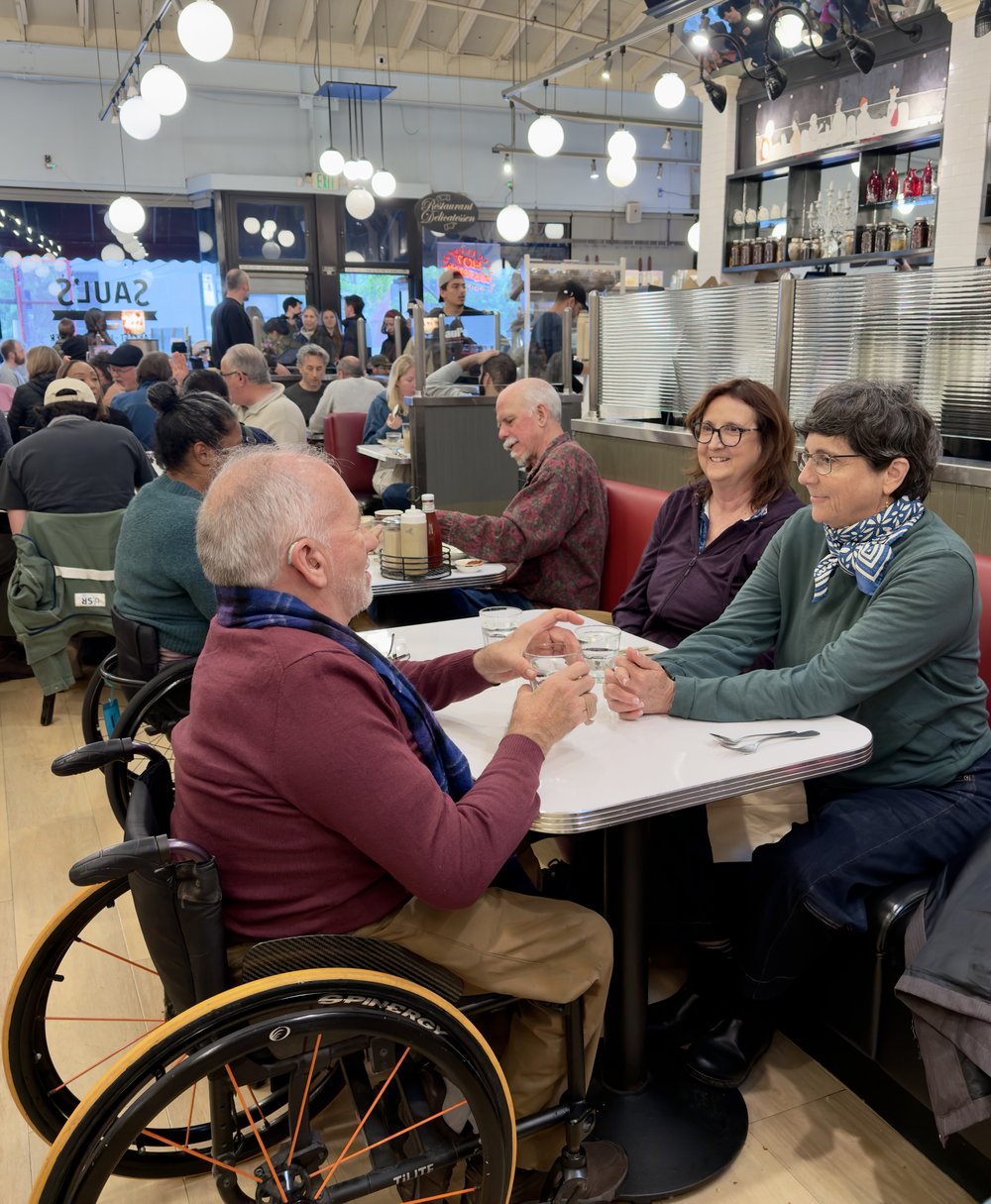
People with disabilities, their families, and allies dine out nationwide, on the same day, not hidden, not waiting for an invitation, just present in public life.
Take your seat at the table. Thousands of us, in thousands of restaurants, all at once – a shared action that says "we're here," that will add up, restaurant by restaurant, to real accessibility improvements.
There's no ticket and no RSVP. Pick a restaurant, bring your people, and go.

2026 Saturday 6–9 p.m. local time
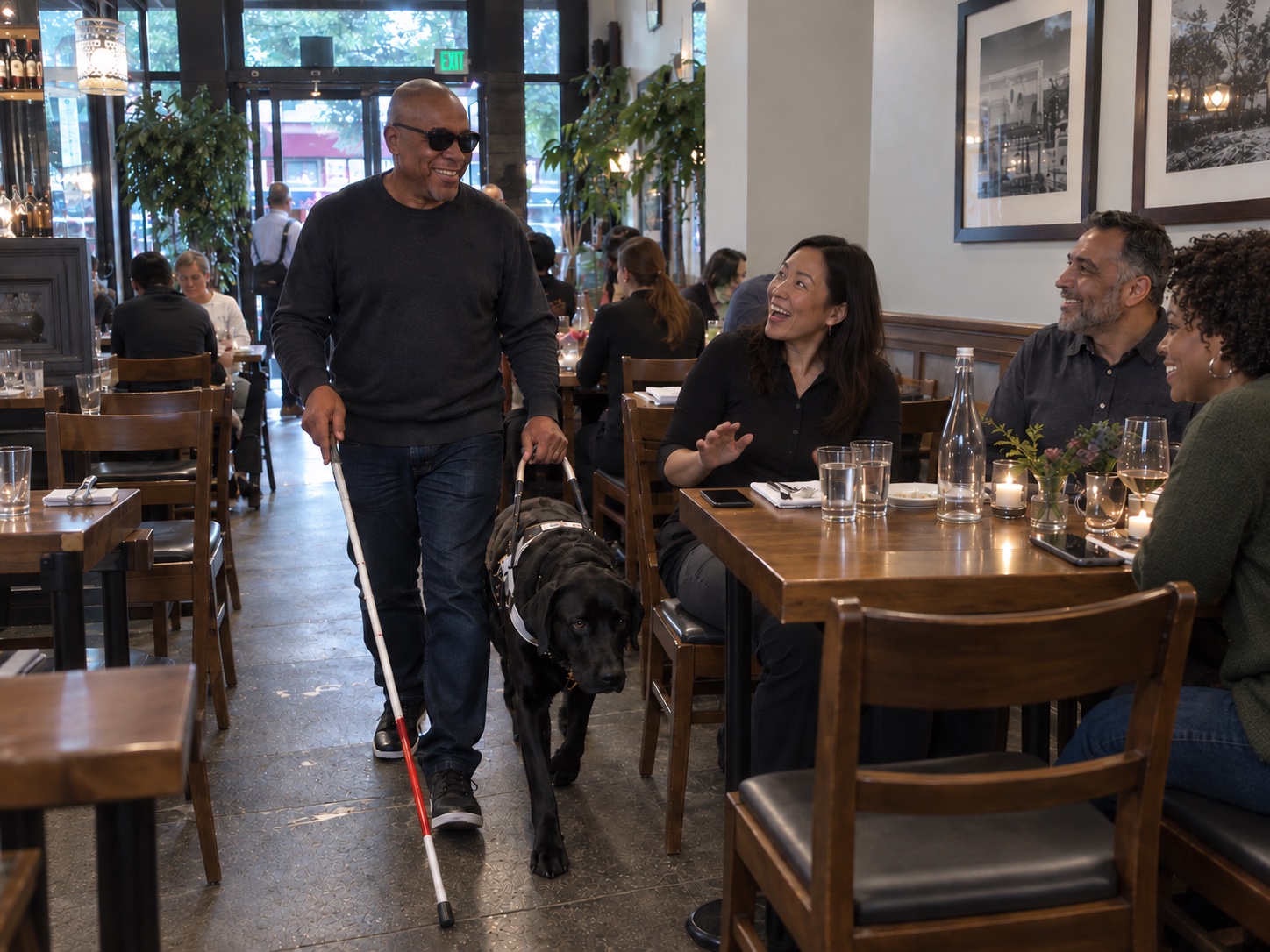
DNO: Our Mission
Restaurants and cafés are central to public life – yet more than three decades after the ADA, many still have high service counters, table layouts that don't work for wheelchairs, and restrooms that are noncompliant. Over time, that wears people down. People with disabilities, people aging into less mobility, people who've spent years navigating barriers that others never notice – sometimes stop bothering. Not because we don't want to participate, but because the effort stops feeling worth it. We become, quietly, absent.
"And when we're absent, business owners might think: 'Why should we focus on accessibility when we don't really get wheelchair users in here.'" What they don't see is that the inaccessibility is exactly why. The people who tried once didn't come back. And those who heard about the access problems never came at all.
Disability Night Out breaks that cycle. By showing up, visibly and collectively, every October, we will start a cycle where more presence leads to more awareness and more accountability. This will spur more fixes, and more reasons to come back all year long.
Disability Night Out is three things at once: a community night out, a collective action, and a real-world access check. Restaurants and cafés are where so much social connection happens, but too many of us skip them because access is poor. DNO is a chance to enjoy a great meal with friends, family, or whoever joins you, while making a visible statement, not a request for a favor, but an insistence on the access the ADA already guarantees. And we'll show restaurants the patrons and spending power they're missing out on. Every table we occupy becomes part of a real record: what worked, what didn't, and the physical changes that need to happen, that restaurants can actually act on.
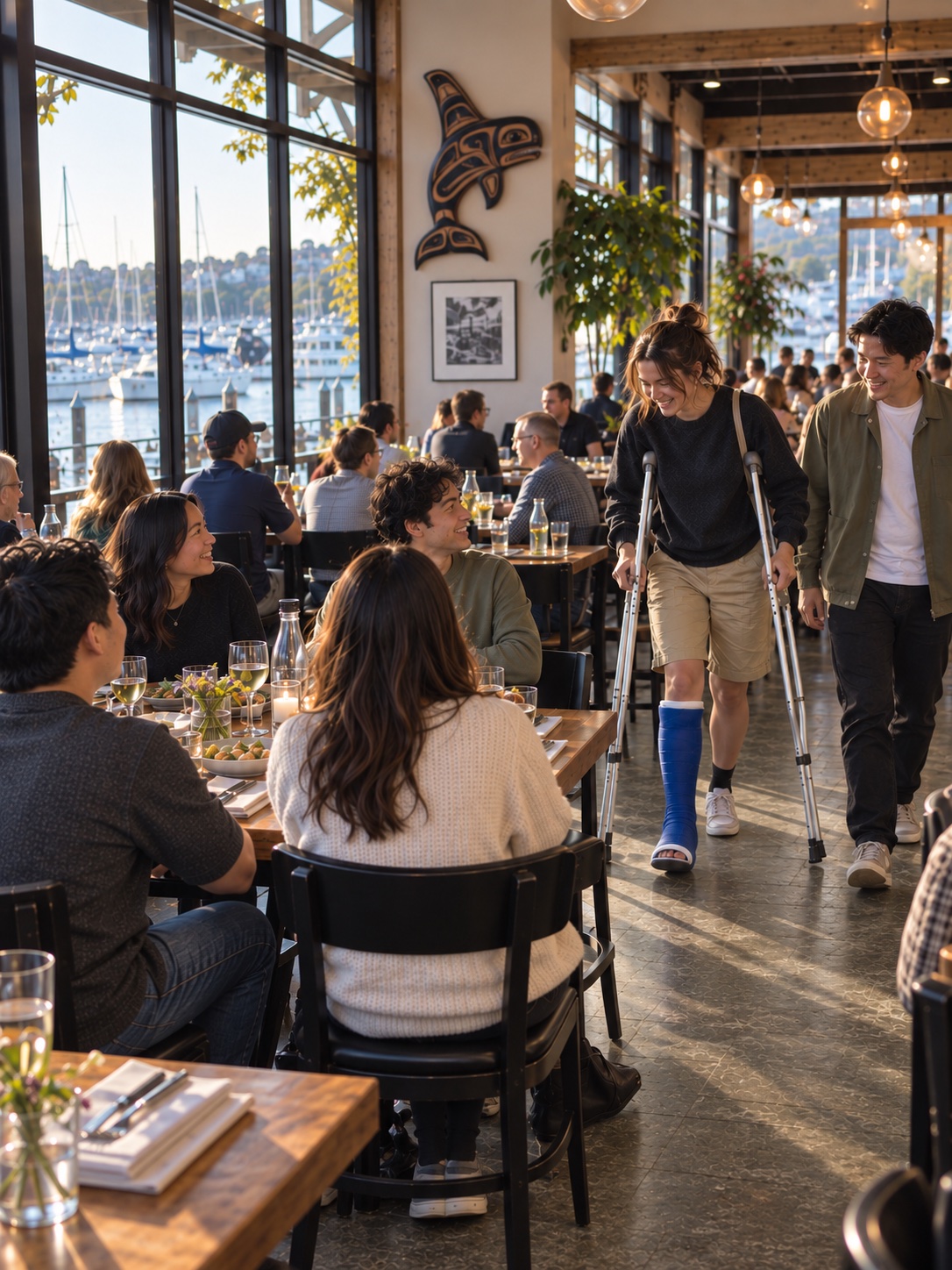
How DNO Works
Disability Night Out is an organic effort, and anyone who shows up is part of it. There's no ticket and no RSVP. Each of us is in charge of our own night, which is what makes it exciting.
- Pick your restaurant and your people. Go with friends, family, coworkers, or neighbors. We recommend a place you haven't been yet. Maybe you'll spot something that needs fixing, but even if you don't, you're sharing a great meal with the people at your table, and that's a successful night. Saturday evening is busy, so reserve ahead if you can.If you'd like to join others nearby, find your city’s Facebook Group.Find a Facebook GroupNot every city has a Group yet, but you're welcome to start one, or just bring your own crew.
- Show up on October 10, between 6 and 9 p.m. your local time. The more of us who go out during that window (and the more of us wearing a shade of purple or lavender for solidarity), the greater our visibility and impact. If another time works better for you, that's fine too. And if you don't have time for dinner, stop by a bar for a drink.
- Tell us what happened. After your night out, post on social media (#DisabilityNightOut, and tag @DisabilityNightOut on Facebook or Instagram) and rate your experience on our scorecard at disabilitynightout.org/share. What you share turns this one night into useful information that helps restaurants get it right for everyone. Your feedback stays anonymous to the restaurant: we never share your name.Not sure what makes a restaurant welcoming, or what to look for? Our free Patron Field Guide is a plain-language cheat sheet, so you don't need to know the ADA or building codes to take part.
Whether or not you can make it out that night, you can still support the movement: follow Disability Night Out on Instagram or Facebook and share a post or two. If you know others who'd like to join in, please forward this page along.
Wear purple on October 10.
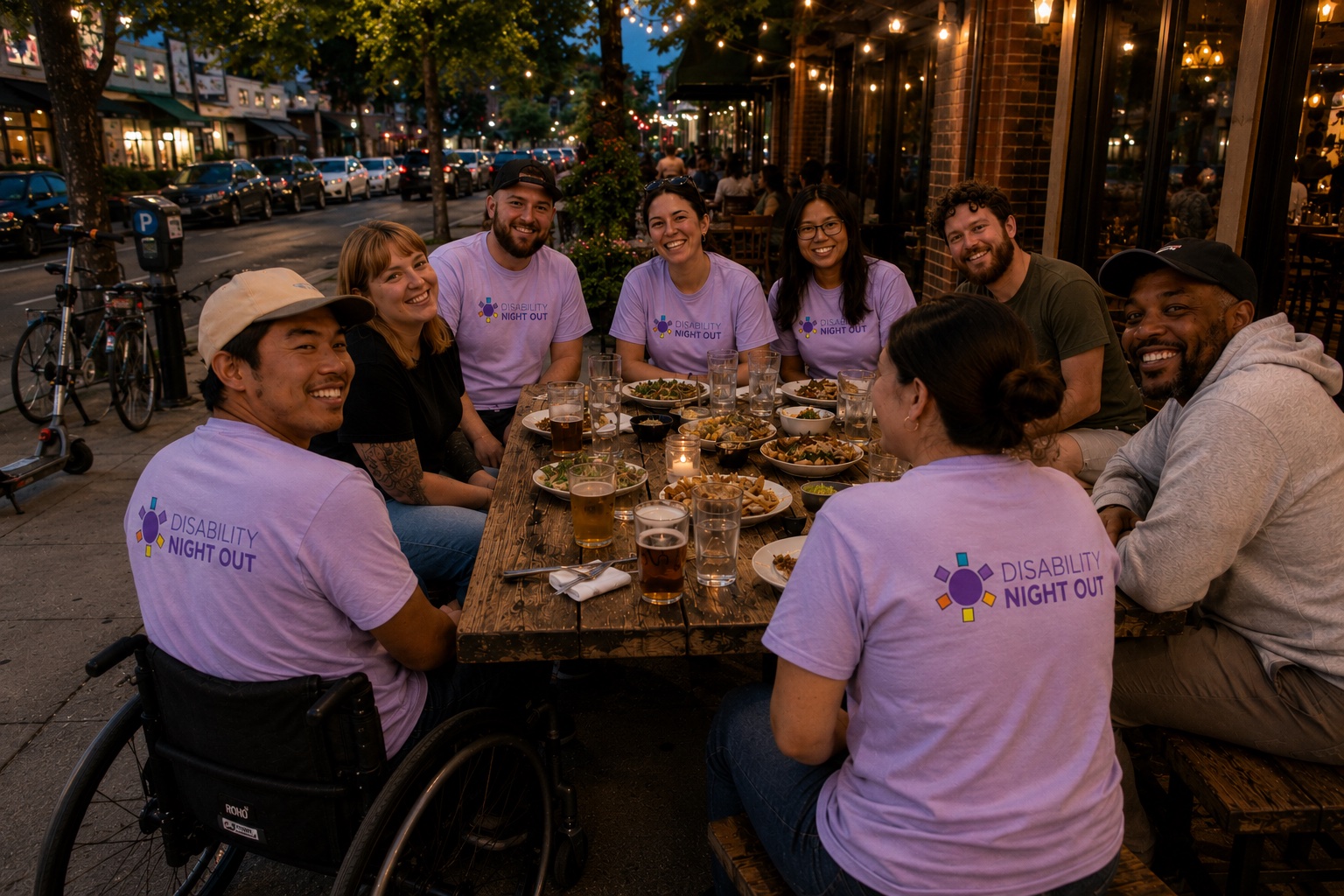
Wear purple or lavender (any shade) on October 10, for solidarity. It can turn a room of diners – with and without visible disabilities – into one impossible-to-ignore group. Plus, it photographs well!
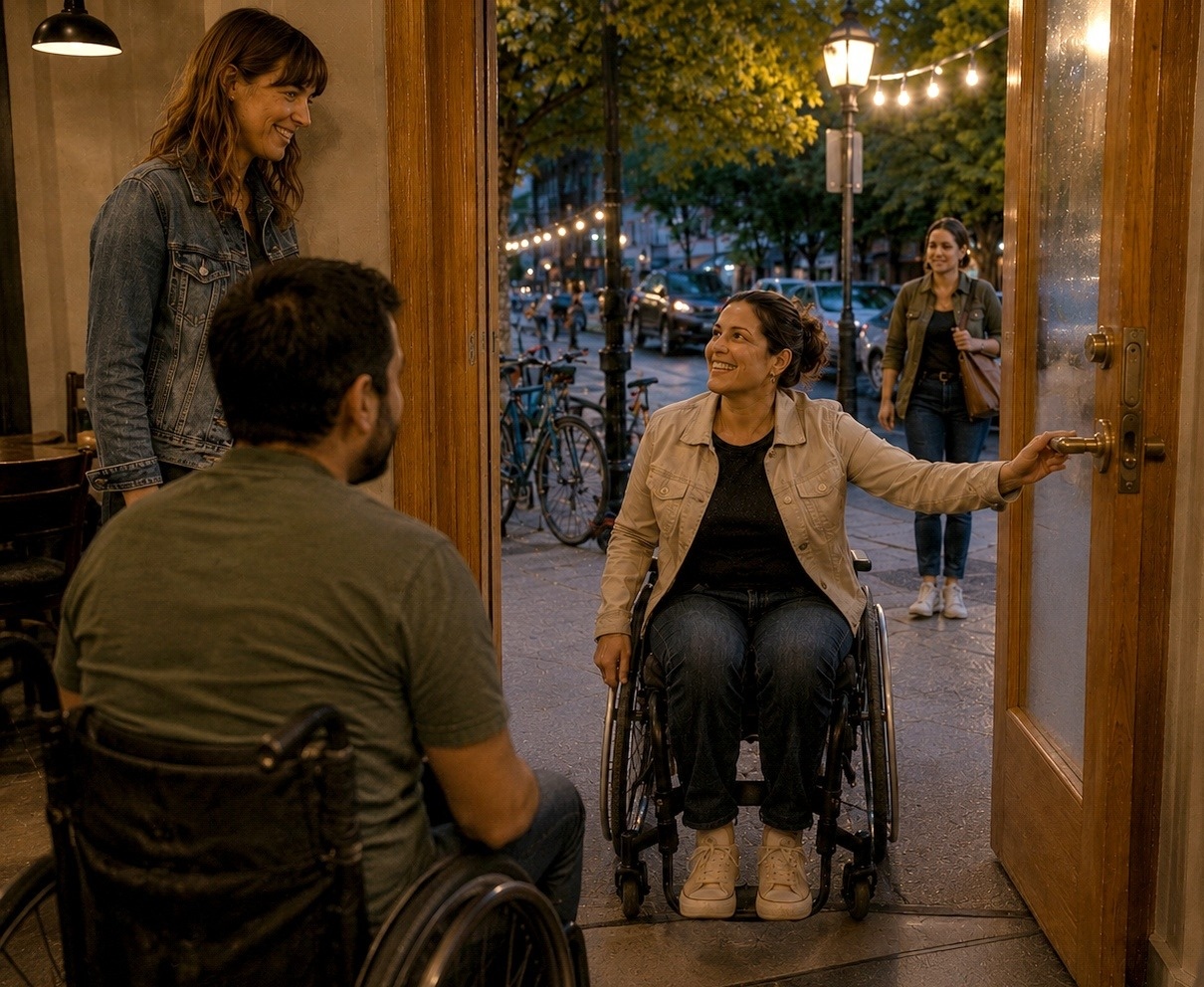
Decades after the ADA – most restaurant spaces still don't provide what people need.
The ADA turned 36 in July 2026. Too many U.S. restaurants are still out of full ADA compliance. But ADA compliance was always meant to be a floor, not the ceiling. And just designing for a legal minimum doesn't guarantee a space people actually want to be in. It never addressed hospitality. It never asked whether a space feels welcoming, whether someone can sit comfortably at a table with their group, whether the design makes a person feel like a full participant in public life.
Many things that make a restaurant welcoming have nothing to do with the code; most non-fixed elements, acoustics, and lighting are not covered by the ADA. Building codes and regulations produce technically compliant spaces. But only generous, thoughtful design produces communal places. Those are different things, and it's time we said so.
- Tables that don't allow a wheelchair to pull up – the space "complies," but the seat at the table isn't real.
- The accessible bar section repurposed as a condiment shelf – technically present, functionally gone.
- An accessible route blocked by a host stand or extra chairs – compliant on paper, not in practice.
The ADA sets a legal minimum. The standard we want to help restaurants reach is one where the space is genuinely useful, comfortable, and worth coming back to.
The Facts
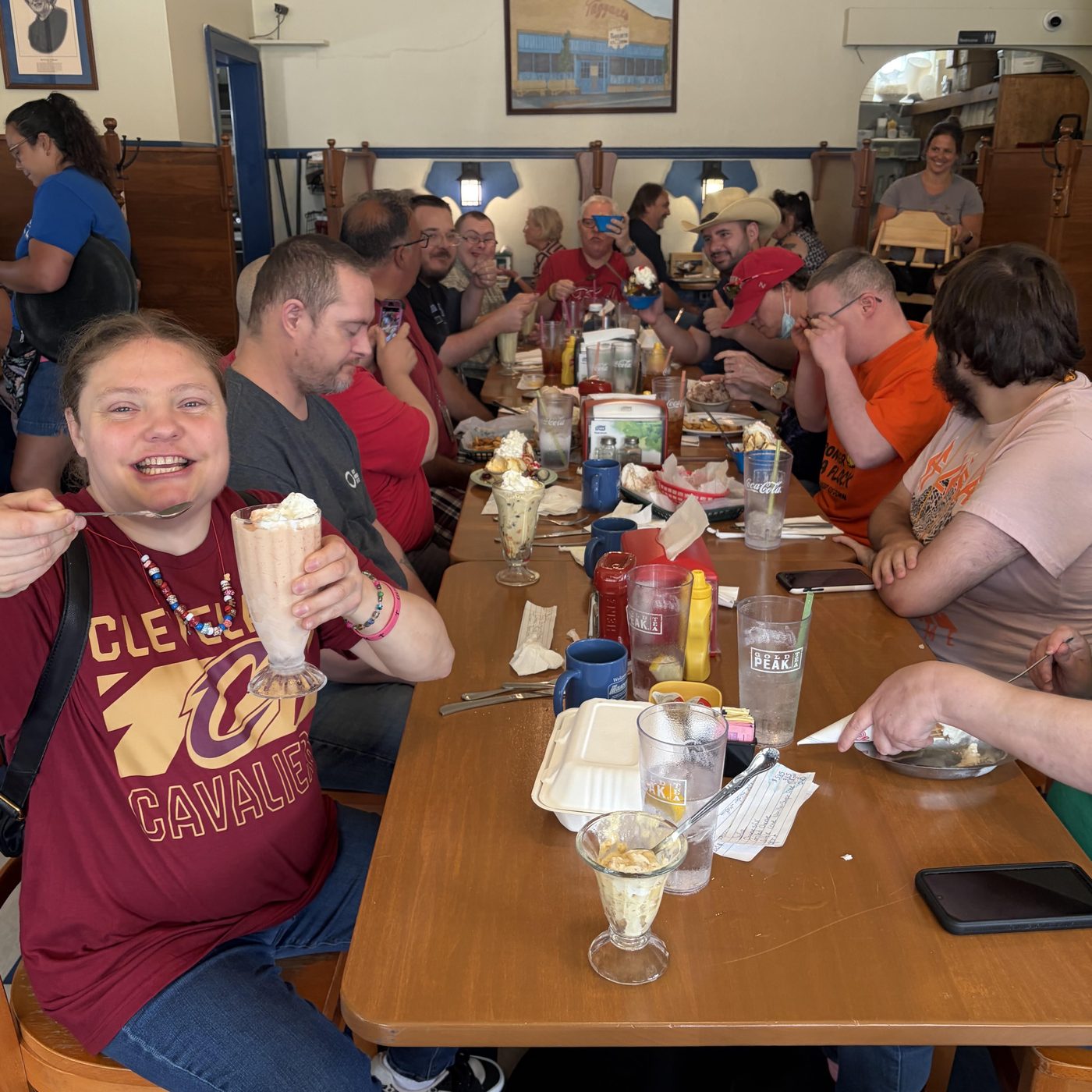

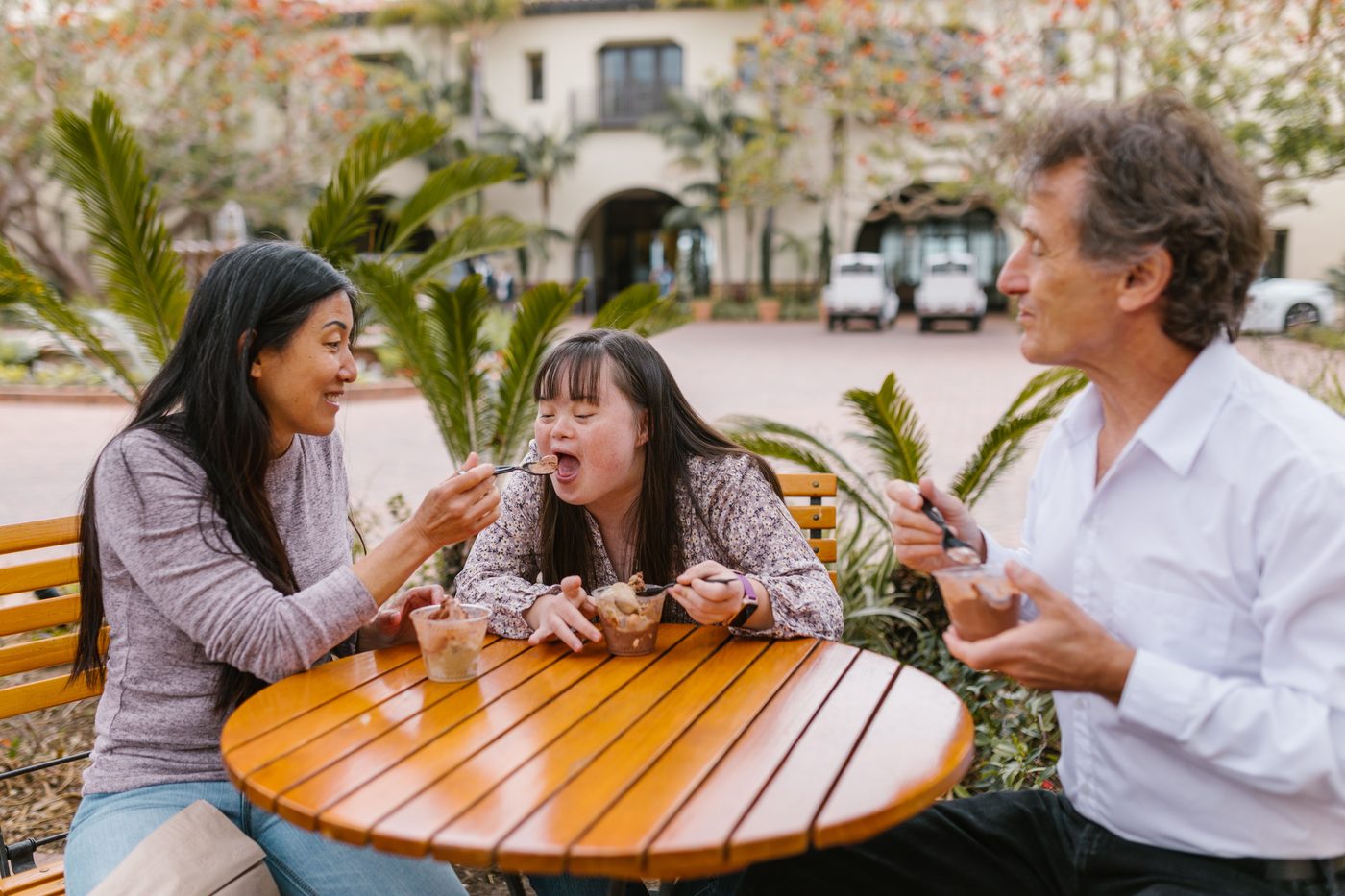
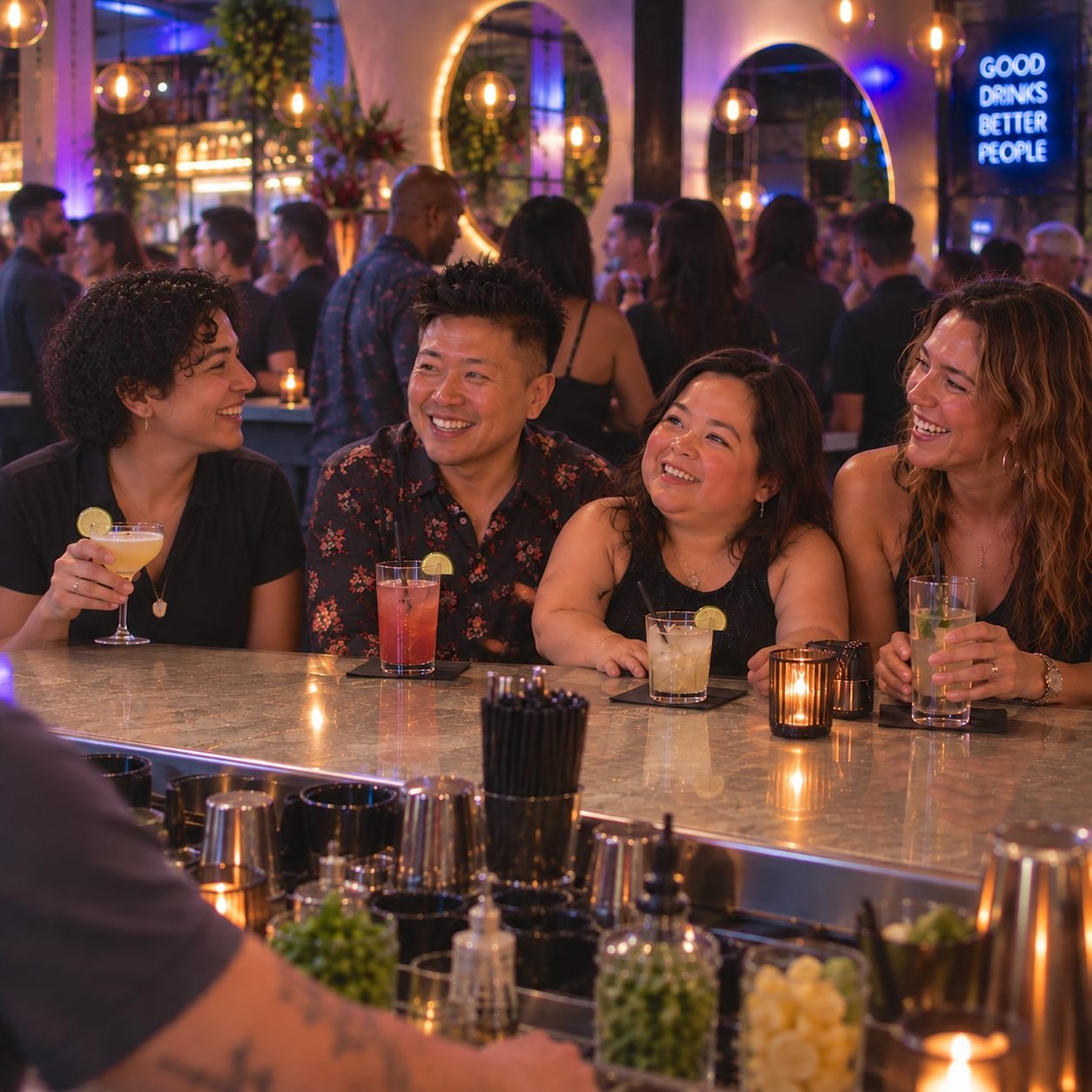
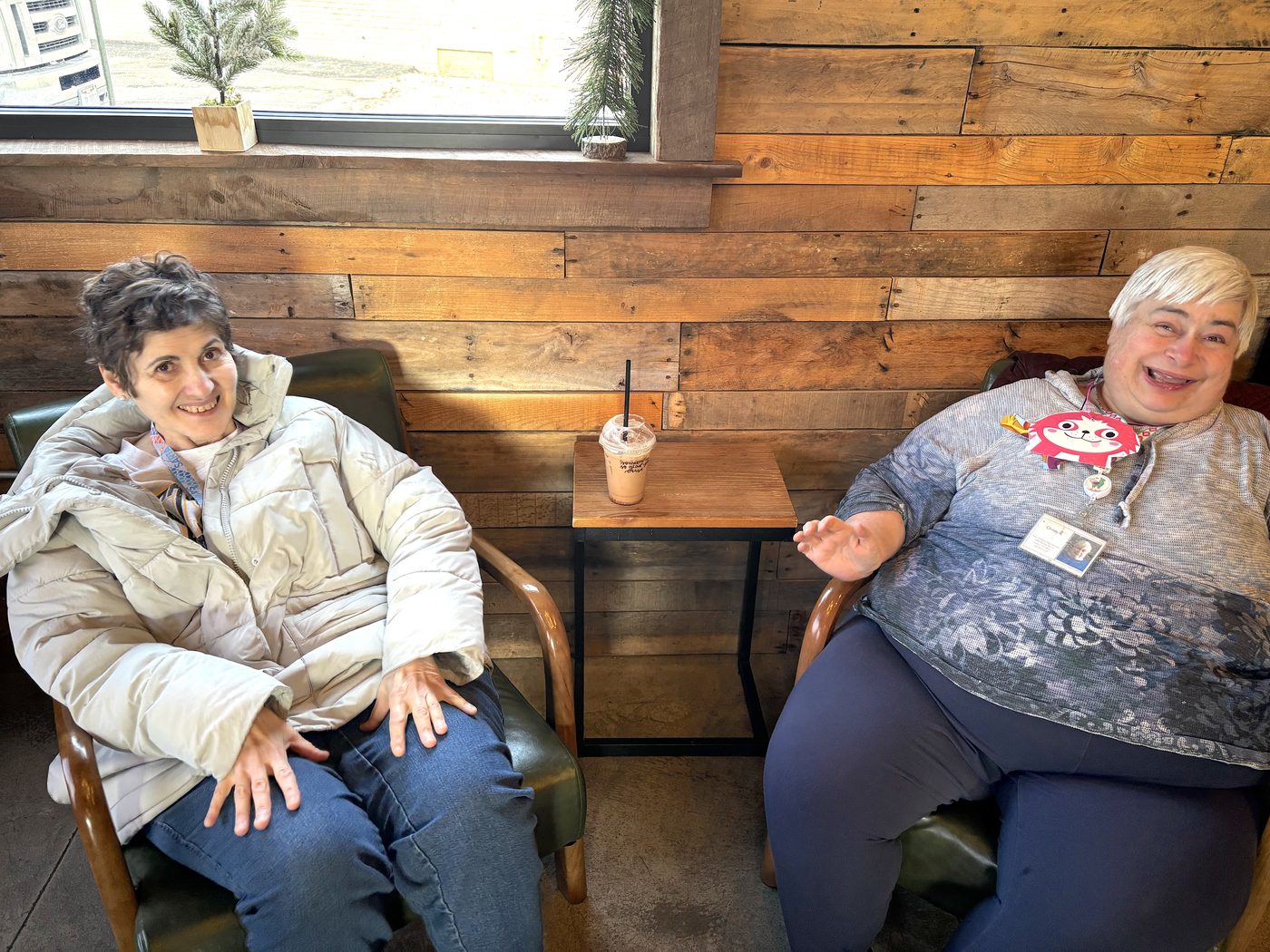
Diner and café photos by Nick Grishaber on Disability Is Beautiful (disabilityisbeautiful.com (opens in a new tab)).
Tools for patrons, restaurants, and everyone in between.
These are the ways all of us can have impact beyond showing up for one night.

Going out should feel effortless – and when it doesn't, you deserve to know exactly what to ask for. This guide puts practical tools in your hands: what to look for before you arrive, what you're entitled to once you're there, and how to advocate with confidence.
- How to read a space as you enter.
- What you're entitled to – and how to ask for it.
- Words you can actually use – calm, clear, and effective.

Many restaurants inherit spaces they assume are ADA-compliant – but aren't. Your business is built on being welcoming and hospitable to everyone. We want to help make that real.
- How to assess your entrance – because that's where welcome begins.
- Tips for helping guests navigate your space comfortably.
- What the ADA actually requires – clearly explained.
Patrons can report what worked and what didn't. Restaurants can ask questions, share improvements, and connect constructively with the community they're trying to serve.
Want to help spread the word? Get the free flyer, postcard, and email graphic
Wear it. Share it.
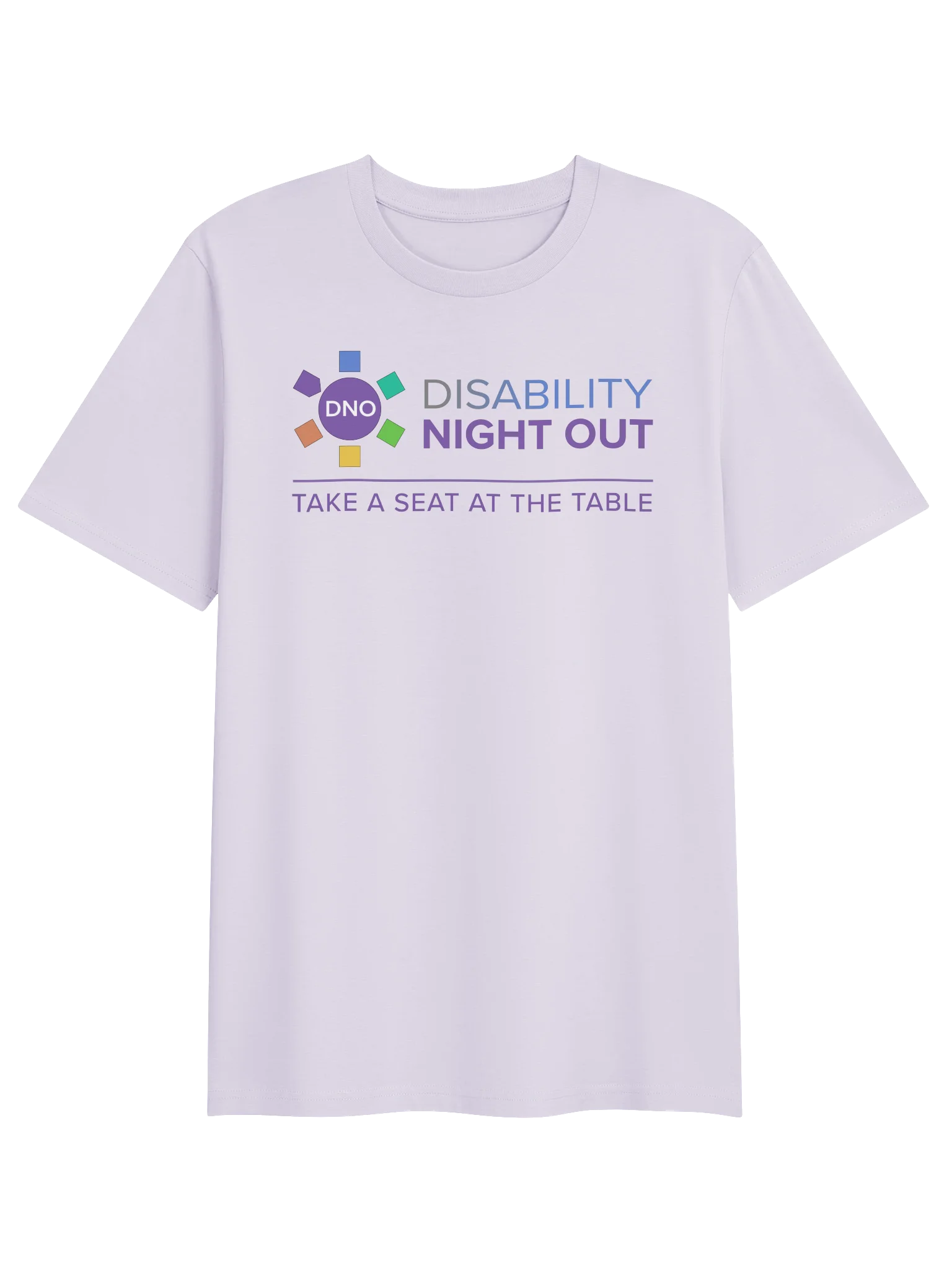
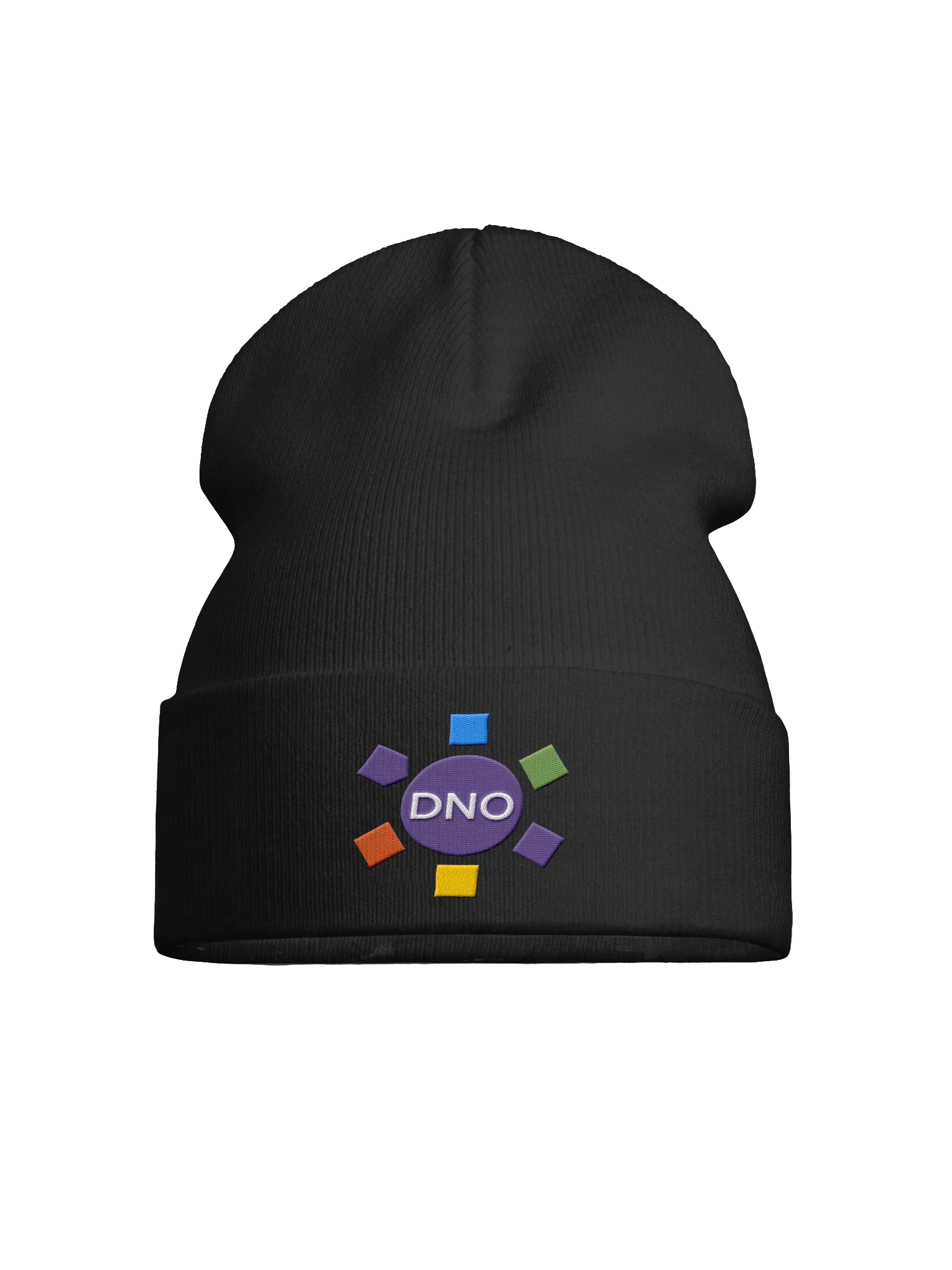
Disability Night Out's power is visibility. Friends, family, and allies wearing DNO gear make a simple, immediate statement: we came here together, and we belong here together. Whether you're a wheelchair rider or showing up in solidarity, wearing the logo turns a dinner out into a team arrival – and signals to every other table, and every owner watching, that this community is present and paying attention.
Be part of the first national Disability Night Out
Whether you're a person with a disability, a friend, a family member, or an ally – your seat at the table matters. Sign up and we'll send the details on how it works. There's no ticket and no RSVP: you pick the restaurant, bring your people, and go.
Get the DetailsNo spam. Just the details you need for October 2026.